
The Investigation’s Public Face
Blow OutThis flow follows media pressure, public appeals, and the challenge of reassuring people while withholding uncertain information.
increasing Bearing strength in each event
 decreasing
Bearing strength in each eventdecreasingA Carefully Limited Briefing

A Carefully Limited Briefing
A suspicious death goes public
Helen Gates addresses a packed media room and confirms that Ronnie O’Neill’s death is being treated as suspicious. She initially avoids naming a cause beyond organ failure.
A journalist asks whether a foreign substance or pellet was involved, forcing Gates to decide how much to reveal. She confirms an air-rifle pellet but rejects a political motive as unsupported.
Reassurance and appeal
Gates asks the public for sightings around Worsley Golf Course and insists people should not panic. The statement must encourage useful information without making the killer’s method a source of wider alarm.
The briefing becomes a compromise between secrecy, transparency, and public safety. Its limits also leave room for speculation.
National Anxiety

National Anxiety
The pellet invites speculation
Anthony Ginley asks whether the attack is connected to Russia, invoking the history of ricin assassination. The unusual method rapidly gives the story a political frame beyond the evidence.
Gates denies a political connection, but each carefully chosen phrase risks becoming the next headline. The uncertainty is magnified by a method associated with secret state violence.
A fragile public reassurance
Police believe the motive is personal and ask residents to remain calm. That assessment is provisional, not a guarantee that the danger is over.
Public communication must prevent panic while keeping faith with facts that have not yet been confirmed. The investigation’s credibility depends on that distinction.
An Appeal for Melissa

An Appeal for Melissa
A family speaks publicly
With Melissa Walsh missing and no contact from her captors, the Anti-Kidnap and Extortion Unit arranges an appeal involving her parents. The purpose is to generate sightings and impress on the abductors that Melissa needs her inhaler.
The appeal is difficult because Ryan Walsh is not an obviously sympathetic public figure and Andrea Walsh is distraught. Their pain is real even when the family’s criminal context complicates public response.
Silence deepens fear
The kidnappers make no demand, warning, or explanation. Police cannot tell the family whether silence means a plan is under way or that Melissa has been abandoned.
The public appeal is both practical and desperate: the police need information before the medical risk becomes irreversible.
The Pressure on the SIO

The Pressure on the SIO
Leaders demand progress
After the attacks spread across jurisdictions, the Chief Constable and Mayor question Joanne Stuart about leads, resources, terrorism, and the missing child. Their concerns reflect political pressure as much as operational need.
Jo has to explain that the working theory is criminal rather than terrorist, while admitting that the motive and suspect remain uncertain. Every cautious answer risks sounding like failure.
The press looks for certainty
Helen Gates faces hostile questioning when no suspect has been arrested. Joanne’s absence from a scheduled media opportunity worsens the burden on her senior officer.
The gap between public expectations and investigative timelines becomes a conflict in its own right. The team must keep working while the story demands immediate resolution.
A Story Reaches the Captors
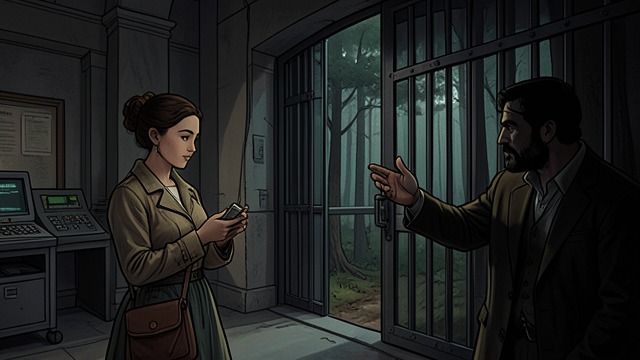
A Story Reaches the Captors
Public attention builds
Agata Kowalski’s article urges readers to care about Melissa and report suspicious activity. The piece does not expose confidential police information, but it broadens the search beyond official channels.
Joanne worries about the conflict between Agata’s journalism and their relationship. She also recognises that public attention may help a missing child become more than a case file.
Information becomes a clue
A coded message reaches Agata through the newspaper, giving coordinates in Delamere Forest. She understands that the caller may be pointing toward Melissa and alerts Max Nailor.
The press contact, initially a source of personal tension, becomes part of the rescue chain. Public communication carries risks, but it can also create a route for information to surface.
Tuesday morning, October 17
Tuesday, October 17, after the briefing
Wednesday, October 18
Thursday and Friday, October 19–20
Sunday, October 22
